In My Thankful NICU Nurse Era Groovy
As a designer who’s digitized and stitched over 300 medical-themed embroidery files—and reviewed hundreds more for craft businesses—I opened In My Thankful NICU Nurse Era Groovy expecting warmth, but not quite this kind of grounded sincerity. It’s not flashy. It doesn’t shout. Instead, it leans in—softly, thoughtfully—with rounded letterforms, gentle curves, and a subtle retro-modern rhythm that feels like a quiet nod between colleagues who’ve held space in the NICU. I tested it on a heavyweight cotton twill tote bag for a local nurse appreciation pop-up, and right away, something clicked: this isn’t just text—it’s a moment made tangible.
A Design That Breathes With Its Audience
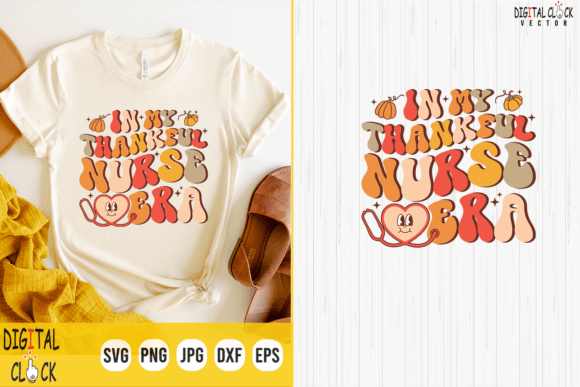
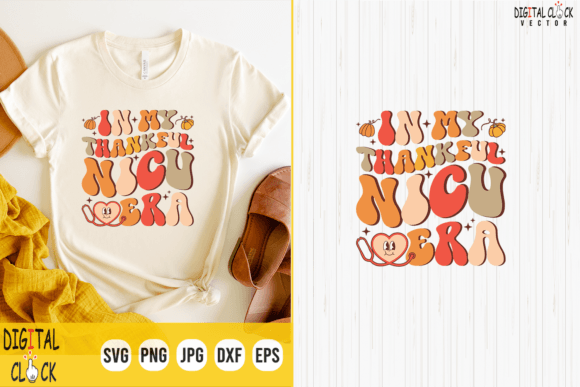
In My Thankful NICU Nurse Era Groovy lands with emotional precision. The phrase itself carries weight—“Thankful,” “NICU Nurse,” “Era”—and the “Groovy” twist adds humanity without undermining gravity. Visually, it avoids clichés: no stethoscopes, no hearts-as-icons, no cartoonish smiles. Instead, it relies on typography as tone. The letters have modest swell and taper—just enough to suggest hand-drawn charm, but clean enough for crisp satin stitch definition. There’s no dense fill work or tight kerning traps, which means fewer thread breaks, less rehooping, and smoother transitions across curved surfaces like caps or pillow rolls.
I stitched it on a navy French terry sweatshirt using medium-weight cutaway stabilizer and standard 40-weight rayon. At 3.5 inches wide (my go-to size for chest placement), every curve held its shape. The “G” in “Groovy” has a friendly loop—not too tight, not too open—and the lowercase “a” and “e” kept their counters clear even at reduced scale. That matters when you’re stitching for real people who’ll wear this daily, wash it weekly, and gift it meaningfully.
Where It Shines—and Where to Pause
This design excels in heartfelt, low-pressure applications: embroidered baby blankets for NICU families, linen tea towels for hospital staff lounges, aprons for neonatal nutritionists, or minimalist pillow covers for pediatric offices. It works beautifully as an embroidered patch, especially when backed with iron-on adhesive and top-stitched with a narrow running stitch border. As a tote bag design, it reads clearly from three feet away—no squinting, no lost detail.
But let’s be practical: avoid using In My Thankful NICU Nurse Era Groovy on ultra-thin fabrics like lightweight voile or stretchy performance knits without significant stabilization testing. The letterforms rely on clean edges—those can blur or pucker if the fabric shifts mid-stitch. Likewise, on dark fabric, stick with high-contrast thread (ivory, soft gold, or heather gray) rather than trying to match background tones. And skip it for tiny hoop sizes under 3 inches—those subtle curves compress into ambiguity.
It’s also not ideal for layered garments like quilted jackets or heavily textured jacquards. The design’s quiet confidence depends on clarity—not competition with surface noise. If your client wants bold branding on a holiday sweater, pair it with a simple monogram instead of stacking it over busy patterns.
What It Does for Your Craft Business
For Etsy sellers and small shop owners, In My Thankful NICU Nurse Era Groovy is quietly strategic. It answers a real need—not just “nurse apparel,” but *NICU-specific gratitude*, a niche with deep resonance and limited visual options. Buyers searching for “NICU nurse gift” or “thank you for NICU care” aren’t looking for generic slogans. They want recognition that feels seen. This design delivers that without sentimentality.
As a digital embroidery file, its versatility across SVG, EPS, PNG, and DXF formats means you can adapt it for screen printing mockups, heat-transfer vinyl cuts, or even laser-engraved wood signs—expanding your product line without redrawing anything. Just remember: always verify licensing before listing finished items or reselling the files themselves. The description says “Printable • High-Resolution • I”—but check whether commercial use is explicitly permitted before adding it to your shop as a standalone machine embroidery design.
Designer Notes You’ll Actually Use
- Test first on scrap fabric—especially if embroidering on fleece, terry cloth, or ribbed knit. Adjust tension slightly downward if you see puckering.
- Review stitch density before scaling up. While the original file appears optimized, enlarging beyond 4.5 inches may require lightening fill areas to prevent stiffness.
- Confirm hoop size compatibility. This layout fits comfortably in a 4×4 hoop, but double-check your own machine’s max width before loading.
- Inspect small details in black-and-white mockups. What reads as warm on screen might fade on charcoal fabric—so preview contrast early.
- Use proper stabilizer: medium-cutaway for stable wovens, tear-away for lighter cottons, and fusible + cutaway combo for knits.
- Check thread color contrast on both light and dark backgrounds. A single-color version (e.g., all-navy on cream) often reads cleaner than multi-tone interpretations.
- Ask yourself: does this support your brand voice? If your shop focuses on modern minimalism or heartfelt healthcare gifting, yes—it aligns. If you lean into whimsy or maximalist illustration, consider pairing it with a complementary icon, not replacing it.
Final Thought: It’s Not Just a Phrase—It’s a Pause
Embroidery isn’t just about what stitches where—it’s about what the wearer feels when they touch it, what the receiver understands before reading a word, and what your customer remembers when they recommend your shop to a friend. In My Thankful NICU Nurse Era Groovy earns trust because it doesn’t overpromise. It doesn’t try to say everything—just what matters most, in a voice that feels earned, not engineered.
Whether you’re stitching a single custom sweatshirt for a retiring NICU charge nurse or building a seasonal collection of handmade products for your boutique, this design holds space—gently, honestly, and with quiet craftsmanship. That’s rare. And that’s why, after years of reviewing T-Shirt Designs and Graphics for real-world use, I keep coming back to pieces like this: not because they’re perfect, but because they’re purposeful.