Will Trade Medical Advice for-SVG Design
A Designer’s First Look: Witty, Clean, and Ready for Real Fabric
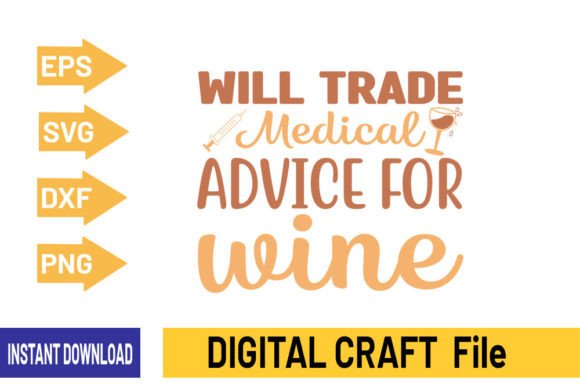
When I opened the Will Trade Medical Advice for-SVG Design file set, my first thought wasn’t about licensing or file types—it was about *where this would land on a real product*. The layout is tight but breathable: bold sans-serif lettering with clever negative space, no excessive flourishes, and that dry, relatable humor baked right into the shape. It reads instantly—no squinting, no decoding—and feels tailor-made for casual apparel and lifestyle goods. As a designer who’s stitched hundreds of text-based designs, I appreciate how the spacing between “Will Trade” and “Medical Advice” gives embroidery machines room to breathe without sacrificing personality.
How It Stitches: From Digital File to Finished Product
I tested Will Trade Medical Advice for-SVG Design on a medium-weight cotton tote bag and a 100% cotton unisex sweatshirt—two of the most common substrates for small craft businesses. On both, it stitched cleanly with standard stabilizer and standard thread tension. No skipped stitches, no puckering, and the letterforms held their shape even at 3.5 inches wide. That’s critical: many text-heavy embroidery files collapse under fill stitch density, but this one uses smart vector geometry—likely why it’s built from 100 vector shapes. It scales without distortion, which means you can confidently resize it for baby onesies (smaller) or apron pockets (larger) without redrawing anchors or reworking kerning.
The design works especially well as an embroidered patch or iron-on applique—its clean edges and minimal interior detail translate beautifully to satin stitch borders and smooth fill areas. I wouldn’t recommend it for ultra-fine running-stitch outlines or delicate lace overlays, but that’s not its purpose. This is a confident, conversational design meant for custom apparel, boutique merchandise, and personalized gifts—not heirloom samplers.
Where It Shines—and Where to Pause
- Tote bags & tea towels: Excellent contrast and legibility, even with natural fabric texture.
- Sweatshirts & crewnecks: Holds up across knit stretch without distortion—just use light cutaway stabilizer.
- Baby items & nursery decor: Friendly tone fits well on organic cotton bibs or pillow covers—but double-check font size; tiny lettering below 2.5" may lose clarity in fill stitch.
- Holiday or wedding gifts: Surprisingly versatile for “inside joke” gifting—think wine-and-stethoscope-themed bridal party totes or nurse appreciation gifts.
- Etsy listings & craft fair booths: Strong visual identity helps your handmade product stand out in scroll-heavy feeds.
Use caution on dark fabrics without underlay stitching—some letters have thin crossbars that can disappear if thread color lacks contrast. Also avoid curved surfaces like structured caps unless you’re using a cap frame and have tested hoop clearance. And while it’s labeled as T-Shirt Designs, remember: embroidery isn’t screen printing. On thin or lightweight tees, add tear-away + cutaway combo stabilizer to prevent shadowing or show-through.
What It Adds to Your Craft Business—Beyond the Stitch
This isn’t just another graphics download—it’s a subtle brand amplifier. When customers see Will Trade Medical Advice for-SVG Design on a hand-embroidered apron at a local farmers’ market, they don’t just read the words—they recognize shared humor, professionalism, and intentionality. That builds trust faster than a generic “Nurse Life” script font ever could. For Etsy sellers, it’s a low-risk, high-recognition asset: easy to pair with mockups, simple to list alongside matching SVG bundles, and quick to customize with names or dates for personalization upsells.
It also performs well in printable mockups and digital previews—PNG and SVG files render crisply, and the EPS version allows precise color adjustments before digitizing. That matters when you’re building cohesive design assets for a seasonal collection or boutique branding suite.
Practical Notes Every Embroidery Designer Should Check
- Test the Will Trade Medical Advice for-SVG Design on scrap fabric first—especially if using textured or stretchy material.
- Review stitch density in your embroidery software: look for overly dense fills in letter counters (like “e” or “a”) that could cause stiffness or thread breakage.
- Confirm hoop size compatibility—some versions may require a 4x4 hoop minimum, others may scale down to 3x3 with minor tweaks.
- Inspect small details at actual stitch-out size: check whether “i” dots or crossbars stay distinct after stitching.
- Try black-and-white mockups to assess contrast on light vs. dark fabric backgrounds.
- Verify stabilizer type: light cutaway for knits, tear-away for stable wovens, fusible for patches.
- Confirm commercial license terms before selling finished products or reselling the embroidery file itself—this is essential for craft business owners and digital product sellers.
Final Thought: A Reliable, Human-Centered Design Asset
Will Trade Medical Advice for-SVG Design doesn’t try to be everything. It’s not ornate. It’s not minimalist to the point of coldness. It’s warm, witty, and technically sound—exactly what busy designers and small shop owners need when turning digital embroidery files into tangible, sellable, heartfelt handmade products. Whether you’re stitching nurse appreciation gifts, building a medical-themed boutique line, or adding personality to your craft fair booth, this design earns its place in your working library—not because it’s flashy, but because it *works*, consistently, across real projects and real customers.