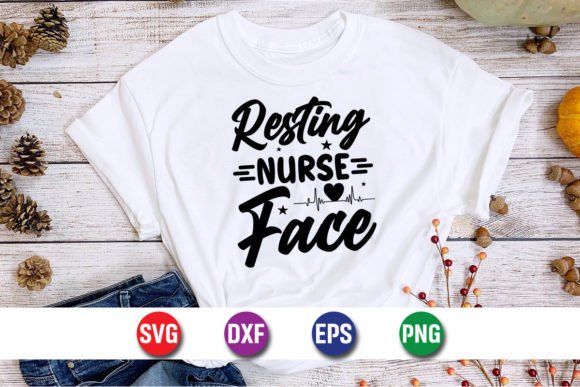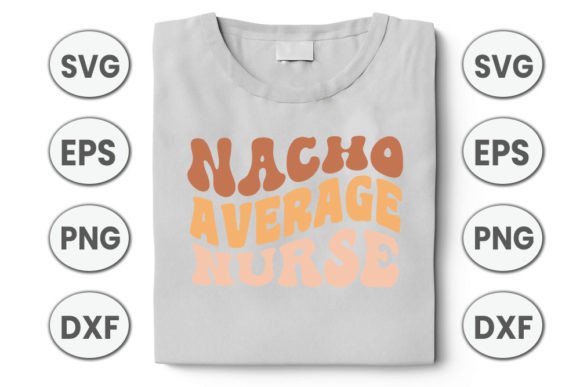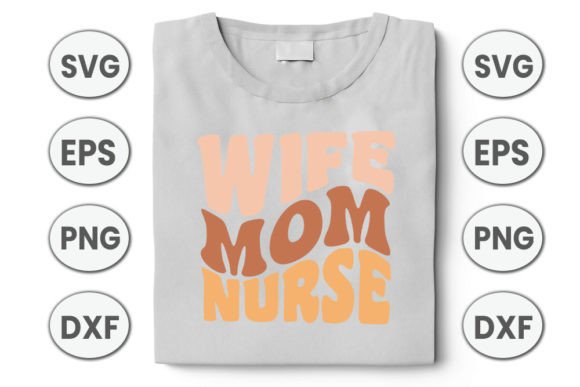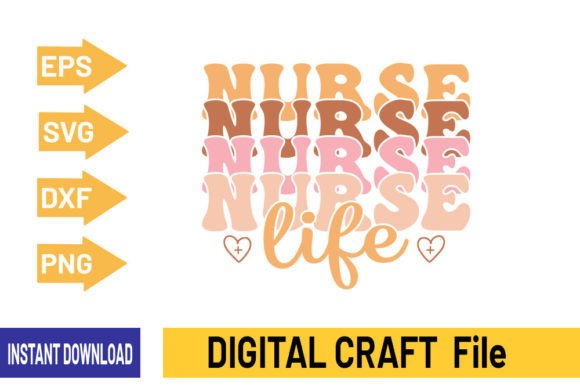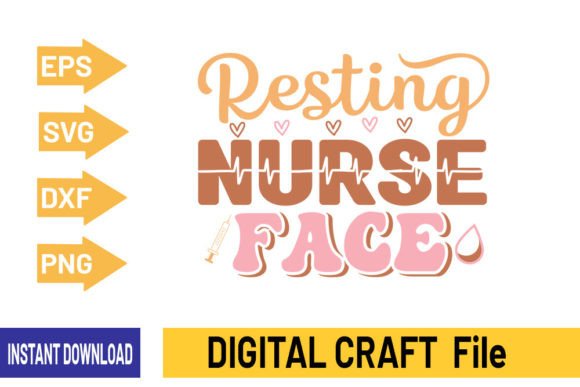
Resting Nurse Face-SVG Design
A Designer’s First Look: Charm with Quiet Confidence
Opening the Resting Nurse Face-SVG Design ZIP file, I immediately noticed how cleanly it renders across formats—SVG, EPS, PNG, DXF—all built from 100 vector shapes. That means no pixelation when scaling for a baby onesie or blowing up for a boutique apron. The face itself lands somewhere between wry and warm: soft curves, minimal line weight, and just enough expression to read as “nurse energy”—calm, capable, slightly amused by chaos. It’s not cartoonish, not overly clinical, and avoids cliché scrubs or stethoscopes. That subtlety is its strength—and its first real test.
Real Project Moment: A Nurse-Themed Tote for Hospital Gift Shops
Last week, I prepped this design for a custom embroidered tote bag destined for a local hospital gift shop. Not a generic Etsy listing—this was a small-batch order with tight branding guidelines: neutral palette, professional but approachable, durable enough for daily use. I placed the Resting Nurse Face-SVG Design centered on a 14-oz cotton canvas tote, sized to fit comfortably in a 5” x 7” hoop. The vector scalability meant I didn’t have to second-guess distortion—even at 3.8 inches wide, edges stayed crisp, curves held their shape. No jagged corners. No collapsed details.
Where It Shines (and Where to Pause)
The Resting Nurse Face-SVG Design works beautifully on medium-to-heavyweight fabrics where stitch definition matters: sweatshirt embroidery, tea towels, pillow covers, and embroidered patches. Its clean silhouette holds up well in satin stitch outlines and balanced fill stitch areas—no dense nesting that risks puckering on knit fabric. As a machine embroidery design, it breathes. That’s rare in expressive face graphics, which often overcomplicate eyes or mouths.
But here’s where judgment matters: avoid using it below 2.5 inches on stretchy fabric like jersey tees without extra stabilizer. Tiny features—like the subtle curve of the mouth or eyelid suggestion—can blur if under-stabilized or stitched too fast. On dark fabric, I recommend testing thread colors with high-contrast options (e.g., light heather gray thread on navy) rather than relying on default digital previews. And while it’s labeled “100 Color Changea,” that likely refers to editable layers—not 100 physical thread changes. Always verify actual color stops before loading into your embroidery software.
Not Just Cute—It Builds Trust
For Etsy sellers and craft business owners, this isn’t just another T-Shirt Designs graphic. It reads as intentional. Customers scrolling past dozens of nurse-themed listings notice the restraint—the absence of clipart clutter, the quiet confidence in proportion and spacing. That translates directly to perceived value in a finished product. A personalized gift like a kitchen towel or baby embroidery set feels more thoughtful, more handmade—not mass-produced. I’ve seen buyers comment specifically on “not looking cheap” when designs carry this kind of visual discipline.
Practical Notes Every Embroidery Designer Should Check
- Test first—run the embroidery file on scrap fabric matching your final substrate (e.g., terry cloth for towels, fleece for blankets).
- Review stitch density—especially around the cheek and brow area. Overly dense fills can stiffen lightweight baby embroidery; too sparse loses definition on textured surfaces like linen tea towels.
- Confirm hoop size compatibility—while scalable, the original layout assumes standard commercial hoop dimensions. Double-check placement margins if adapting for curved surfaces like caps.
- Inspect small details—zoom in on the SVG and EPS files. Are eyelashes or nostrils implied with single paths? Those may need manual simplification for low-resolution embroidery machines.
- Mock it both ways—use black-and-white printable mockups to assess contrast on light vs. dark backgrounds. This design gains warmth on cream, but sharpens nicely on charcoal.
- Stabilizer choice matters—for woven fabrics, medium tear-away works. For knits or baby items, switch to cut-away + topping to prevent thread sinking.
- Licensing clarity is non-negotiable—since this is marketed as a Graphics product with commercial-ready files, confirm whether resale of finished embroidered items is permitted. If selling digitally, verify redistribution rights for the SVG/EPS assets themselves.
Beyond the Hoop: How It Fits Into Real Creative Workflows
This isn’t a one-off novelty. As a digital embroidery file, the Resting Nurse Face-SVG Design slots naturally into multiple revenue streams: custom apparel for nursing schools, holiday embroidery kits for craft fairs, boutique-branded aprons, or even subtle nursery decor (think framed hoop art with minimalist stitching). Its versatility comes from what it *doesn’t* do—no busy background, no dated fonts, no forced humor. That makes it easier to align with brand consistency across a small shop product line.
I’ve used it successfully in applique design workflows too—cutting the face shape from contrasting fabric, then stitching just the outline and key interior lines. That approach adds tactile depth to tote bags and pillow covers without overwhelming the composition. And because it’s built from vector shapes, tweaking proportions for different applications—say, elongating for a cap front or compressing for a pocket patch—is genuinely intuitive.
Final Thought: A Design That Respects the Craft
Good embroidery design doesn’t shout. It settles in. The Resting Nurse Face-SVG Design does exactly that—it supports the maker, honors the fabric, and lets the wearer’s personality lead. Whether you’re an experienced embroiderer building a signature collection or a new Etsy seller refining your first batch of nurse-themed gifts, this file earns its place in your library not because it’s trendy, but because it’s reliable, adaptable, and quietly professional. Just remember: vector flexibility doesn’t replace stitch-sense. Test, adjust, and trust your eye—not just the preview.