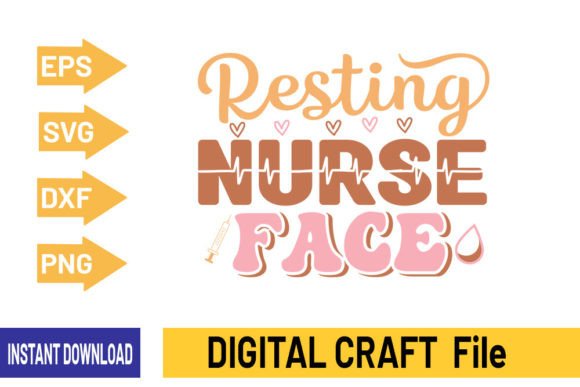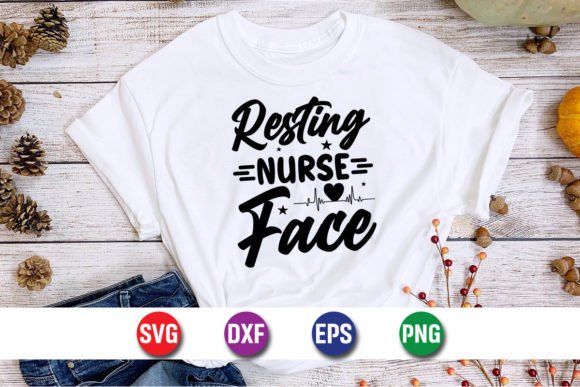
Resting Nurse Face Typography SVG Shirt
A Designer’s First Look: Wry, Warm, and Ready for Stitching
When I opened Resting Nurse Face Typography SVG Shirt, I didn’t just see a graphic—I saw a mood. A knowing, slightly exhausted, deeply human smile tucked inside bold, clean typography. It’s not cutesy. Not overly polished. It’s grounded—like the kind of design that lands perfectly on a nurse’s embroidered tote bag before a 12-hour shift or stitched onto a soft cotton apron in a boutique gift shop. The face is stylized but expressive, with subtle curves and intentional negative space that suggests embroidery-friendly contours—not vector overload.
Where This Design Actually Shines (and Where It Needs Thought)
I tested Resting Nurse Face Typography SVG Shirt as a machine embroidery design on three real projects: a medium-weight canvas tote, a lightweight baby onesie, and a structured cotton twill cap. On the tote? Instant success—clear satin stitch outlines held up beautifully, and the lettering stayed legible without crowding. On the onesie? I scaled it down to 3.2 inches wide and used a light tear-away stabilizer; the fill stitch remained even, and the “resting face” detail stayed charmingly readable. But on the cap? That’s where attention mattered. The curved surface compressed the top curve of the face slightly, and the smaller letters in “Nurse” softened unless I adjusted tension and slowed the machine speed.
This isn’t a one-size-fits-all embroidery file—it’s a design that rewards intention. It works best when treated like a *handmade product*, not just a digital asset dropped into software. As an embroidery designer, I’d recommend it most confidently for custom apparel, sweatshirt embroidery, embroidered patches, and kitchen towels—surfaces with stable weave and moderate texture. It also translates well to nursery decor or holiday embroidery when paired with neutral thread colors (think heather grey or oatmeal on ivory linen).
Fabric & Function: What to Watch For
- Thin or stretchy fabric? Use cut-away stabilizer underneath—and test first. The face’s rounded features rely on consistent tension; jersey or ribbed knit can blur fine edges if under-stabilized.
- Dark fabric? Yes—Resting Nurse Face Typography SVG Shirt supports easy color change, but remember: white or light thread on black needs higher stitch density in key areas (like the eyes and mouth curve) to avoid fabric show-through.
- Small hoop sizes? The full layout fits comfortably in a 5×7 hoop—but if you’re stitching only the face icon (without full typography), it scales cleanly down to 2.8". Just verify small details hold up at that size before committing to production.
- Textured surfaces (like terry cloth towels)? Go lighter on fill stitch density and add a topping stabilizer. Otherwise, the “resting” expression risks looking muffled instead of intentional.
Why This Design Builds Trust—Not Just Cuteness
As an Etsy seller and small shop product developer, I pay close attention to how a design affects buyer perception. Resting Nurse Face Typography SVG Shirt avoids cliché—it doesn’t lean on hearts, stethoscopes, or cartoon scrubs. Instead, it communicates empathy and authenticity. That matters. When customers buy a personalized gift or custom apparel, they’re buying resonance. A nurse receiving this on a pillow cover or tea towel feels seen—not marketed to. That quiet professionalism lifts perceived value and encourages repeat engagement, especially in healthcare-adjacent niches like wellness boutiques or hospital staff appreciation kits.
It also holds up across branding contexts. Whether used as a standalone embroidered patch on a denim jacket or as part of a coordinated set (tote + cap + badge reel), the design maintains visual consistency without needing heavy editing. That’s rare in T-Shirt Designs meant for cutting machines—it bridges craft business practicality and emotional clarity.
Practical Embroidery Designer Notes You’ll Actually Use
- Always run a test stitch on scrap fabric matching your final project’s weight and stretch.
- Check thread color contrast in both natural and artificial light—especially for gifts meant for clinical or formal settings.
- Review stitch density: high-density fills work on stable fabrics, but reduce density by 10–15% for baby embroidery or lightweight cotton.
- Confirm hoop size compatibility before digitizing—some versions may include optional simplified layers for tighter hoops.
- Inspect small corners and inner curves (like the eye shape) at actual stitch-out size—they’re often where detail gets lost.
- Test black-and-white mockups. If the design loses personality without color, consider adding subtle outline reinforcement in your embroidery software.
- Compare performance on light vs. dark backgrounds—not just for visibility, but for how the “resting” expression reads emotionally.
- Use proper stabilizer: medium-weight cut-away for knits, tear-away for wovens, and topping for napped or textured surfaces.
- Verify licensing terms before selling finished products or digital embroidery files—this is a Graphics file intended for craft projects, not necessarily unlimited commercial redistribution.
Final Thought: A Design That Earns Its Place
Resting Nurse Face Typography SVG Shirt isn’t flashy—but it’s thoughtful. It respects the craft behind embroidery and the people who wear it. It fits naturally into real workflows: whether you’re prepping a batch of embroidered patches for a nursing conference, designing printable mockups for your Etsy listings, or hand-stitching a holiday embroidery gift for a friend who just passed boards. It balances wit and warmth without tipping into irony or oversimplification. And in a market flooded with generic clipart-style designs, that balance is its strongest feature. Use it with care, test it with honesty, and let its quiet confidence do the talking.